

An international invoice can look perfectly clear to you and still stall in the client’s payment system. The website may use a brand name while accounts payable needs the registered company name. A dollar sign may not tell the client which dollar you mean. A transfer can also lose money to a fee that neither side discussed. There is an uglier possibility too: a payment appears in your account, the client asks you to send part of it elsewhere, and the original check later turns out to be fake.
The easiest fix is to settle the ordinary details before work begins. If the project is already underway, do it before the first invoice leaves your inbox.
Checked August 11, 2026. This is an operational checklist for direct international client work. Invoice, tax, VAT, record-retention and late-payment rules depend on your country, business type and the client’s location. Confirm local requirements with the relevant authority or a qualified accountant. This guide does not rank payment providers or promise that one route is cheapest.
Before the first invoice: six decisions
A payment method is only one line in the agreement. Both sides also need to know what amount is due, which currency is being used, when payment is due and what counts as a completed payment.
| Decision | What to record | Why it matters |
|---|---|---|
| Paying entity | Client’s legal name, billing address and accounts-payable contact | The invoice must reach the entity that accepted the work and can approve payment. |
| Work | Project, milestone, billing period, purchase order and acceptance point | A clear reference connects the invoice to the approved scope. |
| Currency | Use a three-letter code such as USD, EUR or GBP | A dollar sign alone can refer to more than one currency. |
| Payment date | Invoice date, payment term and a specific calendar due date | The client should not have to calculate when payment becomes overdue. |
| Route | Bank transfer, card invoice, platform or another agreed channel | The route affects instructions, timing, traceability and possible conversion. |
| Fee responsibility | Who bears sender fees, receiving fees, conversion and bank deductions | A paid invoice can still arrive short when this is left unresolved. |
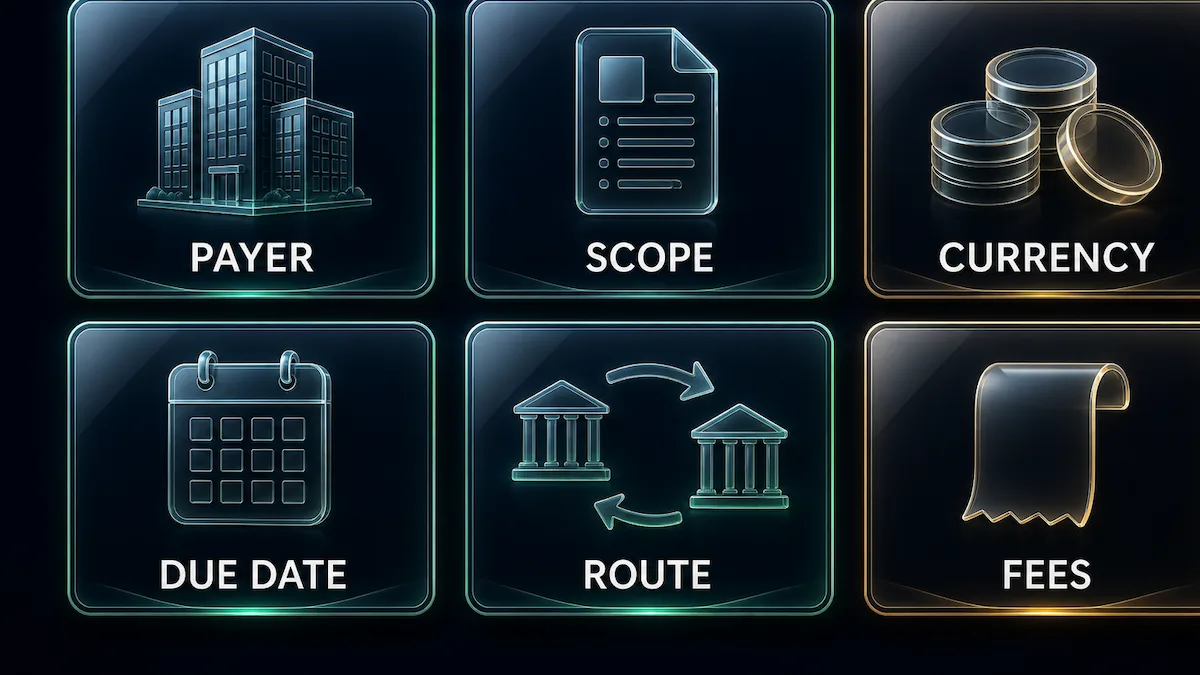
“$2,000, Net 30, bank transfer” leaves too much open. A usable instruction looks more like this: “2,000 USD, due September 10, 2026, by bank transfer to the account below. The client pays its sending charge. Any receiving or intermediary deduction will be identified from the transfer record before the invoice is marked fully paid.” That wording is only an example. Match the fee clause to the agreement and local law.
The name on the website may not be the name that pays you
Ask which legal entity will pay the invoice. The brand on the client’s website may not be the company that signs contracts or runs accounts payable. Record the legal name, billing address, tax or registration details if required, and the person who can confirm that your invoice entered the payment system.
Your name should match the identity attached to the receiving account. If you trade under a business name, check whether the invoice also needs your personal or registered company name. A generic online template cannot answer that for every jurisdiction.
For example, UK guidance requires a unique invoice number, supplier and customer details, a clear description, supply and invoice dates, charges, applicable VAT and the total. Sole traders and limited companies have additional identity rules. That is useful as an official example, but it is not a universal checklist for every country.
Tie the invoice to approved work
Name the project, milestone or billing period. Include the contract date, purchase order or internal project number when one exists. If the client changed the scope, document the change before adding it to the invoice.
Define what triggers the invoice. It might be a signed contract, a deposit, completion of a milestone, written acceptance or the end of a monthly billing period. “Final delivery” and “client acceptance” are not always the same event. The agreement should say which one starts the payment clock.
Do not move a relationship that started on a marketplace outside that platform without checking its current rules. Upwork, for example, has a separate relationship conversion process. This article covers direct-client invoicing after the channel itself is permitted.
A currency symbol is not enough
The quoted price, invoice amount, sender’s funding amount, processor balance, bank credit and money you can actually spend may use different currencies. State the invoice currency with a code rather than relying on a symbol.
If the invoice is in USD but the client funds it in EUR, ask where conversion occurs and what record will show the rate. If you receive USD but later need local currency, that later conversion is a separate cost. Do not treat an unknown fee or exchange-rate effect as zero.
This checklist covers what to agree before payment. Once you have a real quote or completed payout, the separate guide to measuring the exchange-rate spread shows how to check the conversion result.
Net 30 is clearer with a date
A term such as Net 15 or Net 30 tells the client how many days they have. A calendar date removes the arithmetic. Include both if the client uses formal payment terms: “Net 15, due September 10, 2026.”
Before agreeing to a deadline, ask the client how its approval process works. A corporate client may require a purchase order, vendor onboarding, tax form or named approver before accounts payable can release funds. Discovering that after delivery creates a delay that the invoice alone cannot fix.
Late fees and collection rights depend on the contract and applicable law. Do not copy a percentage from a template and assume it is enforceable. If a late-payment clause matters to the project, agree it before work begins and have the wording reviewed for the governing jurisdiction.
Choose the payment route before the invoice goes out
Confirm the route and receiving currency before the invoice goes out. Record the recipient name, account type, currency, bank or processor, and any reference the client must include. Share only the details required for that route.
When bank details change, verify the change through a previously trusted contact method. The client should use the same precaution if it receives new instructions from you. An invoice email by itself is a weak place to authenticate a last-minute account change.
Do not promise that a bank transfer, card invoice or payment provider will produce a specific net amount unless the quote covers the same amount, currencies, funding method, receiving method and destination. The visible transaction fee may exclude conversion or bank deductions.
What belongs on the invoice
- A unique invoice number
- Your legal or registered billing identity and contact details
- The client’s legal entity and billing address
- The invoice date and the service or supply date where required
- A specific description of the service, milestone or billing period
- The purchase order or contract reference where applicable
- The amount and three-letter currency code
- Taxes shown only when applicable under the relevant rules
- The total due
- The payment term and exact due date
- The agreed payment route and required reference
- Fee-responsibility wording that matches the contract
This is an operational starting point, not a legal form. Check the invoice rules for your jurisdiction and business type before relying on it.
The records worth keeping
Keep the records as the project moves. Reconstructing them after a missing payment is slow and often incomplete. UK guidance for self-employed people includes sales invoices, bank statements and bank slips as forms of proof. IRS guidance similarly calls for records that show income and expenses and supporting documents that substantiate transactions. These are jurisdiction-specific examples, not universal retention rules.
| Record | Question it can answer |
|---|---|
| Signed agreement and scope changes | What work and payment terms did both sides accept? |
| Invoice PDF and sent-email record | What amount, currency, route and due date were requested? |
| Delivery and approval record | Was the milestone delivered and accepted? |
| Client remittance advice or payment receipt | When and how did the client say it paid? |
| Transfer reference or trace number | Can the sender, provider or bank trace the payment? |
| Receiving statement | What amount and currency actually arrived, and on what date? |
| Support case numbers | What has already been investigated? |
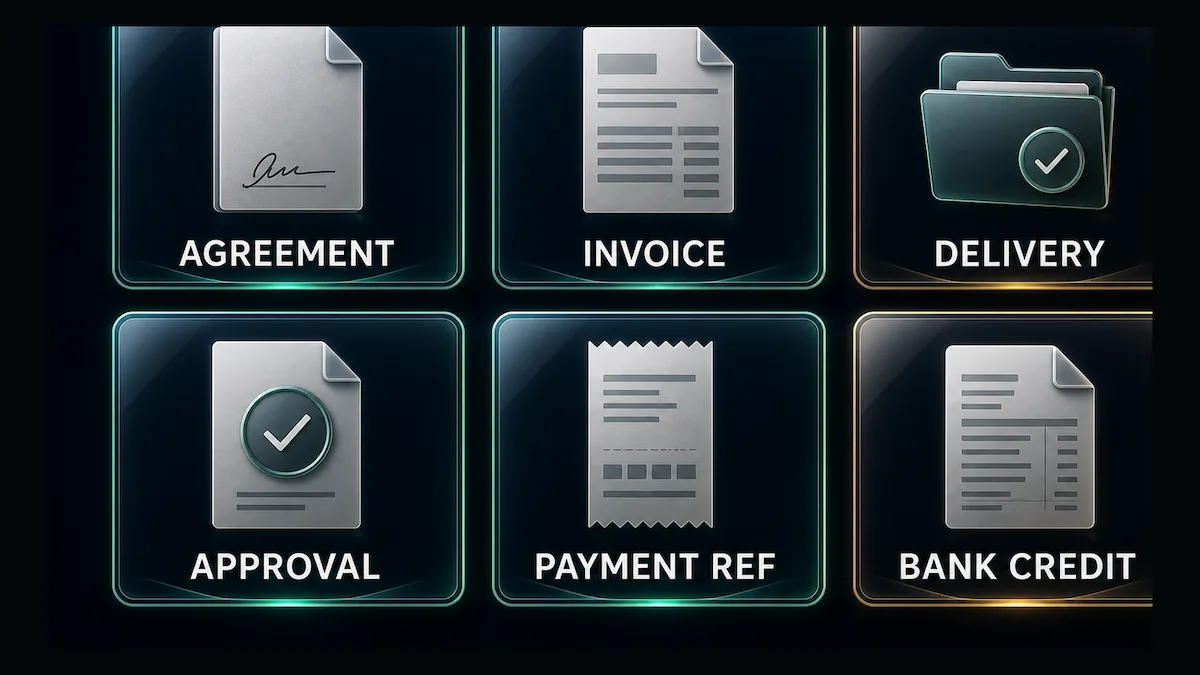
Redact full account numbers, identity documents and unrelated transactions before sending evidence to a client or support team. A bank may need more information through its secure channel, but an ordinary email thread usually does not.
When the amount arrives short
- Confirm the invoice amount and currency.
- Ask for the sender’s payment confirmation and transfer reference.
- Check whether the sender entered the full amount or deducted its own charge.
- Check whether conversion occurred before the transfer was sent.
- Compare the credited amount and currency on your receiving statement.
- Ask the relevant provider or bank about any receiving or intermediary deduction.
- Record unresolved items as unknown rather than assigning them to the client or provider without evidence.
A short receipt does not prove that the client entered the wrong amount. The sender may have selected a fee setting, a bank may have deducted a charge, or conversion may have happened earlier in the route. Compare the records before deciding who should cover the difference.
An overpayment is a reason to stop
If an unfamiliar client sends more than the invoice and immediately asks for part of it back, pause. Verify the transaction independently before you move any money.
The FTC’s fake-check guidance describes the pattern directly: someone sends more than they owe and asks the recipient to send money back or forward it elsewhere. The bank may show the deposited funds before discovering that the check is fake, which can take weeks. The recipient can then be responsible for the money sent out.
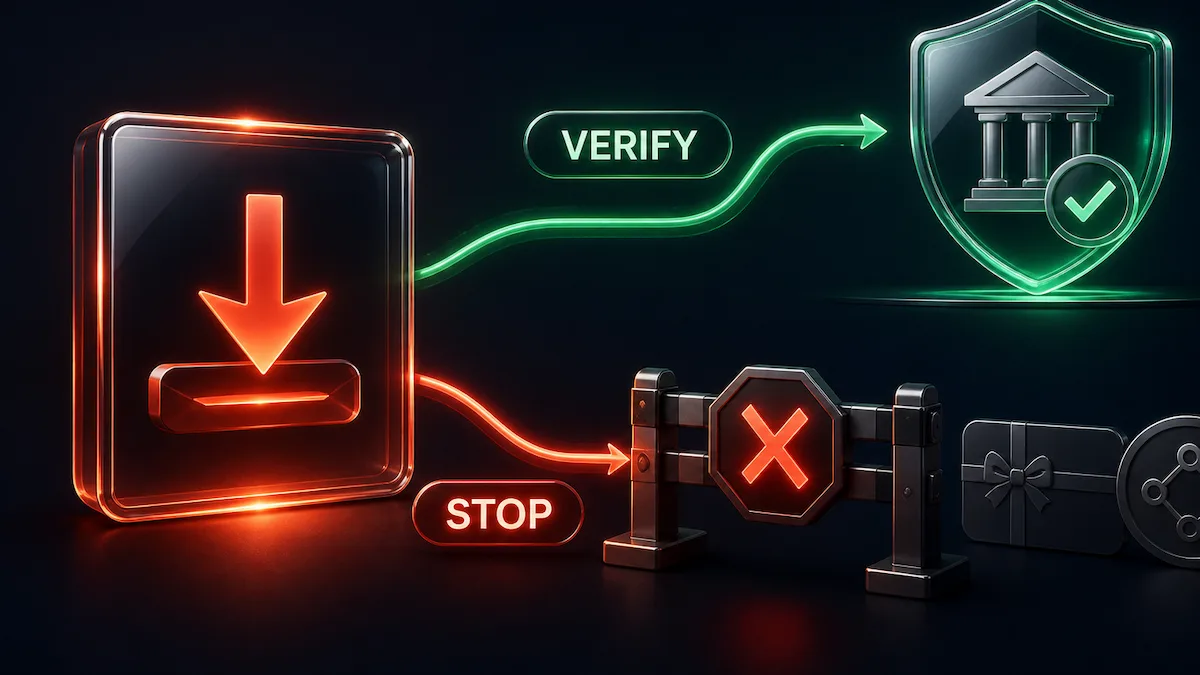
Never use an overpayment to buy gift cards, cryptocurrency, equipment or services for the client. Do not wire a refund to another person. Contact your bank through an official channel and verify the payer and transaction before moving any money. Checks and electronic transfers have different settlement and recall rules, so ask about the exact payment type.
Before the invoice leaves your inbox
Read the invoice once as if you work in the client’s accounts-payable team. Can you identify the legal entity, approved work, currency, due date and payment route without opening an old chat thread? If not, the invoice still needs work.
Then check your side. The receiving name should match your account, the currency should be supported, and any new bank details should be verified through a trusted contact method. Save the final PDF and the sent email with the agreement and delivery record.
A short, complete trail is much easier to use than a long email thread when a payment goes missing.
Where local advice matters
This checklist does not determine your tax treatment, required invoice language, foreign-account reporting, VAT or GST position, late-fee rights, or record-retention period. Those questions depend on jurisdiction, entity type and the service provided. Use official local guidance and qualified advice for those decisions.
This guide does not decide which payment provider is best either. A useful comparison needs the same amount, currencies, sender method, receiving method, destination and timing. Change those inputs and you are no longer comparing the same route.
Reader discussion
0 approved comments
Share a specific question, correction, or first-hand workflow detail. Do not include private financial or identity information.